Showing posts with label Max King. Show all posts

Tuesday, December 9, 2014

Max's Running Tip of the Month - December 2014

The following article was written by +Max King and originally printed in The Footzone Bend's December e-mail newsletter.  Reprinted with permission from The Footzone Bend and Max King.

Max winning the 2014 IAAF 100k World Championships (Photo by iRunFar)

Most of us take some sort of break from running during the winter, either to do something else or just rest the legs for a bit. A break during this time of year has advantages of getting you mentally rested and ready for next year and allowing all that training you've done all year to really sink in. Taking a break this winter doesn't mean that you have to let yourself get completely out of shape and have to start over next season. I always look forward to a winter break, but if I take time completely off my feet, I dread the few weeks back when everything tightens up and just plain hurts to run.

The best thing I've found to give your body a rest and keep your fitness maintained is to cut your mileage down to about 15-25% of your normal so that you're running a small amount every other day. This gives your body the physical and mental break it needs while still letting your muscles retain some of that running memory and conditioning. That way when you do want to start up again everything will be ready to go. Enjoy the season and be safe out there.

Wednesday, November 5, 2014

Max's Running Tip of the Month - November 2014

The following article was written by +Max King  and originally printed in The Footzone Bend's October e-mail newsletter.  Reprinted with permission from The Footzone Bend and Max King.

Max wins the 2010 USA 1/2 Marathon Trail Championships (Bend, OR)

I recently had a dedicated runner come up to me that has been coming to my Tuesday Performance Group workout for the past month and say "I'm a totally different runner than I was a month ago". That is a huge compliment to me and the main reason I do the TPG workouts. And she's exactly right. I've heard it again and again from people, a little bit of hard work and faster running can make you a whole different runner. And notice I say "faster" running and not "fast" running. I love to see everyone from 12min/mi pace to 5min/mi pace out there working out together and encouraging each other.

So, I challenge you this winter to add a little speed and hard work into your running regimen either at my Tuesday Performance Group or on your own. It will build not only speed and endurance but confidence that next year you'll be a better runner.

Be sure to email me at max@footzonebend.com to be added to the TPG list so you know where the workouts will be each week.

Monday, October 6, 2014

Max King's Running Tip of the Month - October 2014

The following article was written by +Max King and originally printed in The Footzone Bend's October e-mail newsletter.  Reprinted with permission from The Footzone Bend and Max King.

Max at the 2012 World Mountain Running Championships.

We've probably touched on this before but going into this time of year sometimes the most difficult part of our run is just getting out the door. We're losing daylight and summer warmth at the same time. Mornings are beautiful but a chill lingers and those shorts and t-shirt just aren't cutting it anymore. Well, never fear, that's why they make great running gear and you hear all the time "there's no such thing as bad weather, just bad clothing". As much as I hate to go from shorts and t-shirt weather, sometimes it's fun to dig through the closet for those long lost tights or pick up a new jacket that fits and feels as well as new shoes do.

It's important to keep your core warm but just as important are good accessories for your appendages. I hate cold hands and it's what keeps me inside many of those really cold days so that's why I have 5 pairs of gloves, one pair for every 10 degrees the temperature drops. And don't forget the hat, Buff for the neck, glasses, arm warmers, and socks. There's something for everybody to keep you warm and comfortable. So remember, as our temps drop, the miles don't have to.

Thursday, September 18, 2014

Max King's Running Tip of the Month - September 2014

The following article was written by +Max King and originally printed in The Footzone Bend's September e-mail newsletter.  Reprinted with permission from The Footzone Bend and Max King. 

John Tribbia, Mario Mendoza & Max King at the 2010 USA Trail Marathon Championships

We are now hurtling headlong into fall race season. All your summer training is starting to show and you're feeling pretty confident (or not) about your upcoming race, marathon or otherwise. One thing I'm going to add to your training, don't forget about eating.

Your race day nutrition plan (or lack thereof) can make or break your race. It's that important to dial in your nutrition so you can stay strong through the final miles. One key to getting that right is training with nutrition. Use your long runs to try new things and drop things that don't work. Don't rely on the race's aid stations for your calories. They may or may not have what you need. Your long run eating won't completely eliminate the risk of having nutrition related problems, but it can significantly reduce them.

The proper nutrition is a key element to any training plan. So, make a plan, get some advice, try it out, and go race.

Tuesday, August 5, 2014

Max King's Running Tip of the Month - August 2014

The following article was written by Max King and originally printed in The Footzone Bend's August e-mail newsletter.  Reprinted with permission from The Footzone Bend and +Max King

We've talked a lot at the shop lately about how we run, specifically what we run in, and we all came up with "lots of stuff". We're shoe geeks and we like to try out different things. I'm lucky enough as the shoe buyer to get to rotate between many different shoes but the one thing that we all had in common was that we like specific shoes for specific runs. A good trail shoe won't necessarily run well on the road and vice versa, a lightweight trainer can make you feel fast on those quicker workouts where your normal trainer doesn't work as well.


So, we need to address the shoe quiver again. I believe it's an important part of every runners gear. A do-it-all shoe is a great way to go, and there are indeed some shoes that will perform for all of your needs if you stick to a few routes. If you get a bit adventurous, and I hope you do at some point, then adding another pair of shoes you can rotate in can be a big benefit.

Here are a few recommended additions to your standard road shoe: If you're adding in rougher trail I would highly recommend a good trail running shoe. Working up to a faster half marathon time? Adding a lightweight trainer will help. If you use your running shoes for your gym or CrossFit workout you can extend their life by picking up a training shoe that will perform better during your strength sessions. I like to go with a more well cushioned shoe for those days where I want to get in a run but I also need some recovery from the pounding.


Whatever it is, there are multiple reason that you might need a second or third pair. Don't be afraid to go that route, your primary shoes will still be there when you need them with extra life to spare. It's an extra up-front investment but evens out over the life of the shoes. You might think I'm just trying to sell more shoes, but trust me, that's not my goal. My goal is to keep you motivated, keep running fun and help you get the most enjoyment out of your runs.

For more information on weekly group runs at the Footzone, check out their website: http://www.footzonebend.com/events/events_calendar 

Thursday, July 3, 2014

Max King's Running Tip of the Month - July 2014

Max just finished 4th at the Western States 100 - his first 100 mile race - congrats Max!

The following article was written by Max King and originally printed in The Footzone Bend's May e-mail newsletter.  Reprinted with permission from The Footzone Bend and +Max King.  

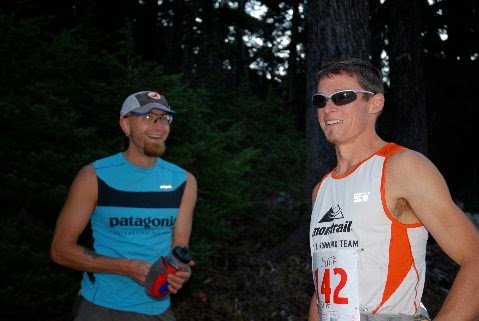
Max with 2013 World Junior Mountain Running Champion Mandy Ortiz (left) and Tabor Scholl (right)

We are now into the heart of our Central Oregon summer and there's no finer time to be a runner in Central Oregon. I love this time of year and it's perfect for injecting a little intensity into our running. Rather than just heading out for your same daily run try something a bit different this month by putting some short 1min pick ups in your run, get with some running buddies and challenge them to do a speed workout, or better yet, come out on Tuesday night to my Tuesday Performance Group for a good interval workout.  Putting some hard effort into a run will make it feel more accomplishing and rewarding and there's no easier time to do that than July in Central Oregon.

For more information on weekly group runs at the Footzone, check out their website: http://www.footzonebend.com/events/events_calendar 

Thursday, June 5, 2014

Max King's Running Tip of the Month - June 2014

The following article was written by Max King and originally printed in The Footzone Bend's May e-mail newsletter.  Reprinted with permission from The Footzone Bend and +Max King.  

If you're like me, you probably get pretty bored doing the same route every day, same long run every weekend. This month I'm going to put out a challenge to find or explore something new each week in June. It can be something simple like a trail you see every day on your normal run but have never taken, or a completely new area of the state that you explore on a family vacation. Whatever it is, make it something fun that you haven't done in a while or ever.

Jeff Browning (left) and Max King (right) at the 2011 Flagline 50k

The beauty of this time of year is that almost a quarter of the state becomes accessible again with the snow melting and opening up new trails and roads we haven't been on in at least 8 months. We take vacations to different places where getting out for a run might be daunting by not knowing the area, but that's half the fun, just make sure you can get back.

It's so easy to reinvigorate your running with some simple changes to your daily routine. So get out there, mark your calendar if you need to, and go do something different. Explore!

- - Max King

Wednesday, April 30, 2014

Max King's Running Tip of the Month

The following article was written by Max King and originally printed in The Footzone Bend's May e-mail newsletter.  Reprinted with permission from The Footzone Bend and +Max King

Time to go for a hike, that's right, a power hike. Racing up at 16,000ft this last weekend reminded me that I need to hike more. I know 16,000ft is a little extreme, but if you've got an ultramarathon coming up this summer chances are good that you'll be hiking sections of it and it's a skill that can gain a lot of time if you've practiced it in training.

Max King - winner of the 2008 XTERRA Trail Nationals in Bend, OR

In most ultramarathons, there will be uphill sections that you will need to hike and that's ok. You shouldn't feel like you have to run all of it. Because you'll be hiking you'll also need to practice it to become strong and efficient switching between running and hiking. Hiking will help build strength in your glutes and quads because you're loading the muscles longer than you are during running. Power hiking will also help your running endurance over the long miles during the ultra.  


Here's how to do it: During your next long run make sure you have included some hills on your route, specifically some pretty steep hills. If it's a short steep hill power hike the whole thing at a quick pace that you can maintain. If it's a longer more gradual hill that you suspect you may need to hike part of it during a race, practice switching between running and hiking with 30 seconds hiking to 30 seconds running. Become efficient and switching between the two modes. This will help you gain strength and keep your heart rate from becoming too elevated during uphill portions of you next ultra. hiking you'll also need to practice it to become strong and efficient switching between running and hiking. Hiking will help build strength in your glutes and quads because you're loading the muscles longer than you are during running. Power hiking will also help your running endurance over the long miles during the ultra.

Tuesday, April 1, 2014

Max King's Running Tip of the Month

The following article was written by Max King and originally printed in The Footzone Bend's April e-mail newsletter.  Reprinted with permission from The Footzone Bend and Max King.


Someone once said "To run fast...you must run fast." Wise words by any standard but also very true. As race season approaches, the same 5 mile loop at the same pace isn't going to make you any faster. You must stress your body by yes, running faster. Start with interspersing short fast sprints of 30sec with 1min jogging rest in between during your easy runs. Gradually build up to full on interval workouts with a structured approach of warm up jog, stretching, hard intervals of 1min - 5min, then cool down jog. It takes time, but it will also reap big dividends when you enter your next 5k.

Sunday, August 4, 2013

The Polish Economic Forum interviews Nancy Hobbs

In advance of this September's World Mountain Running Championships in Poland, ATRA Executive Director Nancy Hobbs answered questions from the Polish Economic Forum.

Nancy Hobbs, Marco De Gasperi and Paul Kirsch

How many people run in the mountains In the USA? Is it a popular sport?

In the United States, mountain running and trail running are often used interchangeably and in most cases, refer to the same type of running in terms of terrain, elevation changes, and running surface. Since mountain runs are often contested on trails – either single track or double track – the trail running term fits quite well. Keep in mind that some mountain runs are staged on paved, or semi-paved surfaces, but must still have significant (uphill) elevation gains to be considered mountain runs – this is one element of mountain running that distinguishes the sport from trail running.

Mountain running has gained popularity and increased awareness in the U.S., especially during the past decade. And in 2003, the U.S. held its first USA Mountain Running Championships in Vail, CO. Since then, the event has been contested three times. In 2004, 2006, 2008, 2010 & 2012  Mount Washington hosted, and in 2007, 2009, 2011 & 2013 Mt. Cranmore served as the host. With new mountain and trail races organized every year, existing races offering shorter distance runs as part of their race repertoire, and parks and recreation departments expanding trail systems, there are more opportunities than ever for people who want to experience trail and mountain running. Add to the mix running groups – both informal and club-oriented – who schedule workouts to attract trail and mountain runners with daily or weekly runs off-road.


Individuals participate in trail running on a daily basis or as weekend warriors depending on lifestyle commitments and the proximity to a trailhead. The sport that primarily attracts people from athletic backgrounds who have a desire to get away from the hustle and bustle of daily routines to experience peacefulness and freedom afforded by the outdoors. Road runners opt for the trails when they seek softer, more forgiving surfaces in an effort to lessen the effects of impact, or overuse injuries. Hikers often switch to running on the trails because they want to go farther at a faster pace. Conversely, mountain bikers who want to go slower and enjoy the scenery, often give trail running a try. Winter cross country skiers and snowshoers often convert to trail and mountain running in their “off season.”

Where is the heart of mountain running in USA? (where are the best tracks?)

I think the "hot beds" are in California, Colorado, New England and also North Carolina. The terrain varies from the different areas of the country whereas in the east, there are roots, tree leaves on trails covering roots, single track, rocky sections. In Colorado some of the trails are smoother at lower elevations (than in the east), not to say they are "easier." California trails can be a bit "drier" depending on the location.


What are the biggest mountain running events in USA? How Many people take part in the events? What are the prizes?

This is another very broad question. There are some races that have larger participation numbers, others have a greater allure or following based on the iconic nature of the event, or the time the race has been held -- like Pikes Peak Ascent/Marathon and the Dipsea. Many of our trail and mountain races are limited in size based on permits required from various entities, or the limitation of the race course -- narrow areas, etc. Some of the events have prize money, others have medals, trophies, something endemic to the area (pottery, crafted medals or awards, etc.).

How organized is mountain running in United States? Who / how many brands support mountain running in the US?

Well organized although there are many different groups, or sponsored events. There are series events from North Face, Montrail, LaSportiva, Salomon and more. USA Track & Field hosts championships at trail distances from 10k to 100 miles and also stages a USA Mountain Running Championships. There are great supporters in the industry from running footwear brands, apparel, etc.


What are the best American mountain runners? Are they coming to Krynica for the World Championships  I’m sure they already have competed with European runners – what are their advantages over Europeans? What are the biggest successes of american mountain runners? Are we going to have an American champion in Krynica?

We have very talented trail and mountain runners in the USA. Of course we have had USA champions at the World Level to include Max King and Kasie Enman in 2011 in Albania. Max is again on the team and of course is hungry for a win! We hope we have a U.S. Champion of course, but it depends of course on the day -- who is competing, who has the best day, who favors the course and terrain in Krynica. Our athletes will be poised for their best effort and we hope that outcome results in medals for our individual and team athletes.


What are your expectations for the polish World Mountain Running Championships?

Challenging course, great competition, cultural immersion for the athletes and supporters of the U.S. team.

When are you coming to Poland? How long will be the trip and will it affect U.S runners performance in Krynica?

I will arrive August 27 to run in the World Masters Mountain Running Champs in the Czech Republic and then travel a bit before arriving in Krynica on Thursday, September 5. We are always at a disadvantage at the event based on long travel from USA. It takes up to 24 hours depending on the area of the country from which the athlete originates (those in California have the longest journey of course). Many of our athletes are seasoned with travel, however, some of the newcomers to the team (especially some of the juniors), are not as familiar with the impact of travel on performance. We provide some support for our athletes in terms of education about jet lag, travel, etc., and we are as ready as we can be for the competition.


What would you say to polish fans wishing to support US runners in Krynica?

Visit us at www.usmrt.com as we will be tweeting and doing live video chats in advance of the competition.  Learn about our team members and cheer us on!

 + + + + + + + + + + + + + + 

Nancy Hobbs has been running trails and directing running events since the mid-80s and her articles and photographs about the sport have been published in magazines including Runner's World, Running Times, Trail Runner, and Ultrarunner.  She is the founder and executive director of the American Trail Running Association, a council member of the World Mountain Running Association, manager of the US Mountain Running Team (started the women’s team in 1995), and chairperson of the USATF Mountain Ultra Trail Council. Hobbs lives in Colorado Springs, CO, but travels extensively nationally and worldwide to support and promote trail and mountain running.

Wednesday, May 29, 2013

Max King's Running Tip of the Month

The following article was written by Max King and originally printed in The Footzone Bend's May e-mail newsletter.  Reprinted with permission from The Footzone Bend and Max King.

Max King winning the 2012 USA 50k Trail Championships

Whew, it's getting warm out there! It's nice to know that summer is right around the corner, which means that staying on top of your hydration routine is becoming increasingly important during daily runs and races.

A drop in hydration levels will cause a drop in performance and also slow recovery times from your runs. Runs of an hour or less in moderate temps probably do not require you to carry too much water, but for anything longer than that, you should be consuming 20-28oz of water per hour. For runs longer than two hours, it is smart to use electrolyte replacement as well.

This sounds so easy in theory, but how do you comfortably carry water on a run? We have plenty of options! Seems like just about every month someone comes out with a new way to carry water. New innovative designs in packs, handhelds, and water bottle designs are out and we have them. Come down, try them out, and see what works best for you. Electrolyte replacement can be intimidating, but technology has progressed a long way from popping salt blocks into your mouth; great tasting electrolyte tabs can make drinking on your run easy and refreshing!" Keeping it simple with just some electrolyte capsules can also be a great way to go. The recommended dose is between 100 and 300 mg of sodium per hour, and the FootZone staff is happy to provide tips for finding the right match for you!

The Footzone is a locally owned full service running store in Bend, Oregon

Thursday, May 2, 2013

Max King's Running Tip of the Month

The following article was written by Max King and originally printed in The Footzone Bend's May e-mail newsletter.  Reprinted with permission from The Footzone Bend and Max King.

Max King, 1st place, 1:15:48. 2012 USA 1/2 Marathon Trail National Championships

It's trail time. Trails are opening up more and more every week, we're getting into trail race season, and we're all getting out there to log some miles on new terrain. To help you out this year here are some tips that will make your trail experience safer and more fun.

1. Carry the essentials. Depending on the distance this is going to mean different things. Shorter runs can be accomplished with a simple hydration carrying system and a little bit of food. If you're new to a trail system I definitely recommend carrying a map, compass, a GPS device or all three. It's easy to get turned around in the woods. And know how to use them. For longer runs in the mountains, a jacket, hat, food, water, and probably some emergency equipment such as a fire starter, space blanket, and water purification is important. You may not need it but if you do, you'll be glad you have it.

2. Be courteous to other users. Since the high mountains aren't open yet a lot of the lower trails are heavily used this time of year by hikers, runners, bikers, and horseback riders. We all love being out in the forest, so we all need to get along. Yield to horses and get off the trail, bikers are supposed to yield to you, but keep your head up and be on the lookout, they're going faster and sometimes it's easier (and safer) if you take the proactive approach to remove yourself from the trail first. And remember, you're in Central Oregon, be nice!

3. Let someone else know where you'll be going, or at least the general area. I'm terrible about this, but this is something that can get you into big trouble if you get injured with no one else around.

4. If you're new to trail running do a little research before heading out to familiarize yourself with the trail system you're going to and the trails you want to run. Use a map or an internet resource to read up on a trail. Nothing can ruin a run faster than getting on a trail that is technically over your head. Your one hour run might turn into a 3hr hike.

This is by no means an exhaustive list of recommendations for staying safe on the trails this summer, only a guide to help you to remember to think about your safety when you head out into the forest and mountains. Happy running!

Training 201 Clinic with Max King -
Thursday, May 9th at 7pm 


Join FootZone for Training 201 with Max King, a follow up to the popular Training 101. Max will lead a discussion answering questions such as:
  • How the body adapts to different training stresses and environmental stress?
  • Do you respond better to speed or endurance training?
Attendance to Training 101 is not necessary to attend Training 201, but you may find attending both helpful.  
Let us know you're coming, please RSVP!


The Footzone is a locally owned full service running store in Bend, Oregon

Wednesday, April 3, 2013

Max King's Running Tip of the Month

The following article was written by Max King and originally printed in The Footzone Bend's April e-mail newsletter.  Reprinted with permission from The Footzone Bend and Max King.

The Footzone is a locally owned full service running store in Bend, Oregon

It's time to get racing, or at least put one on the schedule for motivation to get into training mode. If you're not there yet, don't worry about it, you can save this tip for when you're there, it doesn't expire.

As you start training harder and you're thinking about taking that jump to interval training where you're asking a lot of your legs, don't forget to pamper them with a very good warm up routine to get them ready to go.

A warm up routine should consist of a light jog of 10-20 minutes to get the muscles warmed up, blood flowing, and all the muscles firing. After that, don't just get right into running fast, go through a series of active/isolated stretching for each of the main muscle groups; quads, hammies, calves, and glutes. This series of stretches moves muscles through their range of motion to stretch them but will not weaken them like static (stretch and hold) stretching will. This can take between 5-15 minutes depending on how much you feel like you need and how intense the workout will be. After this, a series of more dynamic stretches can further get muscles stretched, activated, and ready for big powerful movements such as a speed workout. Then, a few strides (50-100m sprints), and you're ready to go. A good warm-up should last anywhere from 20-45 minutes depending on the workout intensity (longer for more intense) and time available. A good warm-up will decrease injury risk and help you get more quality out of your workouts.

Active Isolated Stretches for Warm-Up:
Standing toe touch (hamstrings) - one leg slightly in front of the other, bend down with front leg straight, back leg bent, touch your toe (if possible), hold for 1-2sec, come up, switch legs and repeat about 7-10 times on each leg.

Standing quad stretch - same idea on stretching, grab one foot and pull it up behind you to your glute, hold for 1-2sec and release, switch legs, repeat 7-10 times

Glute stretch - while standing, lift your knee toward your chest, grab it with both hands and pull it further toward your chest, hold for 1-2sec, release and switch legs, repeat 7-10 times.

Calf stretch - standing against a wall or tree, stretch calves using the same technique holding 1-2 sec, bend knees to get the soleus, straighten knees to get the gastroc.

Max King is a Bend, Oregon based elite trail runner

Training 201 Clinic with Max King - Thursday, May 9th at 7pm - Bend, OR
Join FootZone for Training 201 with Max King, a follow up to the popular Training 101. Max will lead a discussion answering questions such as:
  • How the body adapts to different training stresses and environmental stress?
  • Do you respond better to speed or endurance training?
Attendance to Training 101 is not necessary to attend Training 201, but you may find attending both helpful.

Let Footzone Bend know you're coming, please RSVP!